
NC DPI says, “READ THIS FIRST.”

“READ THIS FIRST: In order to understand the charts, it is important that you first read the following information.” THE CHARTS ARE TOTAL, UTTER, USELESS NONSENSE!   http://www.ncpublicschools.org/recruitment/effectiveness/ states…

The North Carolina Educator Evaluation System Evaluation standards for teachers:
•Teachers demonstrate leadership. [Whoopee!]
•Teachers establish a respectful environment for a diverse population of students. [check]
•Teachers know the content they teach. [Very nice, don't you think?]
•Teachers facilitate learning for their students. [Merely facilitate?]
•Teachers reflect on their practice. [navel gazing]

Educators can receive one of five ratings on a standard:
•Not demonstrated  (Lowest Rating)
•Developing “educator is growing … but has not yet demonstrated competence.”
•Proficient-”basic competence”
•Accomplished “exceeded basic competence …most of the time.”
•Distinguished (Highest Rating) “consistently … exceeds basic expectations”

But are the  teachers effective as demonstrated by their students’ academic successes?  (to be continued…)

Turning to a typical “chart” such as the one for Duplin or, for that matter, most other counties we find that only 9 out of 356 teachers (2.5%) were below proficient in “facilitating” the learning of their students. http://bit.ly/wfVN1C Yet their ABC Report Card reveils that nearly 40% of all 3-8 grade students fail the state’s reading test.  http://bit.ly/AuYTnB

This is not to decry or denigrate the hard-working teachers in our state or their struggling students and anxious parents, but it is clear from this example that this whole  “Educator Evaluation System” is worthless.

Maybe the educators of our educators – the schools of education – should be evaluated!  But wait!  The NC education schools were evaluated in 2009 by the National Council for Teacher Quality in a 152-page report.   In preparing their teaching candidates to teach reading, the NC university ed schools scored a “D-.” http://bit.ly/f2uCgI (page 17) The students of their graduates – our children – reflect this failing grade.

But 2009?  Maybe we’ve improved!  Okay, so let’s look at the just-released 2011 report on teacher preparation…page 2… http://www.nctq.org/stpy11/reports/stpy11_northcarolina_report.pdf

Hmmm. Another “D-.”  A blistering report card for our ed schools and credentialing process.

The NCTQ 2011 North Carolina report says things such as, “Preparation programs are not required to address the science of reading, and candidates are not required to pass a test [like NES 104] to ensure knowledge.”

And, “Neither teacher preparation programs nor licensure test requirements ensure that new elementary teachers are adequately prepared to teach mathematics.”

What to do? What to do?

The General Assembly through GS 115C-296(a) assigns to the State Board of Education the job of credentialing our teachers.  Either the SBE should treat this assignment seriously, or the GA should take on this vital task thenselves, thus forcing the ed schools to do their job properly.  OJT navel gazing and more “facilitating” will not help our kids learn to read. http://bit.ly/tbtg9a

[Ed. note:  The views expressed above are strictly those personal opinions of the author and are in no way necessarily reflective of any organization with which he may be associated.]

Posted in Education - K-12, Education - Post-secondary | Leave a comment

The Journey of the Magi

The Journey of the Magi

T. S. Eliot

“A cold coming we had of it,
Just the worst time of the year
For a journey, and such a long journey:
The ways deep and the weather sharp,
The very dead of winter.”
And the camels galled, sore-footed, refractory,
Lying down in the melting snow.

There were times we regretted
The summer palaces on slopes, the terraces,
And the silken girls bringing sherbet.
Then the camel men cursing and grumbling
And running away, and wanting their liquor and women,
And the night-fires going out, and the lack of shelters,
And the cities hostile and the towns unfriendly
And the villages dirty, and charging high prices:
A hard time we had of it.
At the end we preferred to travel all night,
Sleeping in snatches,
With the voices singing in our ears, saying
That this was all folly.
Then at dawn we came down to a temperate valley,
Wet, below the snow line, smelling of vegetation;
With a running stream and a water-mill beating the darkness,
And three trees on the low sky,
And an old white horse galloped away in the meadow.
Then we came to a tavern with vine-leaves over the lintel,
Six hands at an open door dicing for pieces of silver,
And feet kicking the empty wine-skins.
But there was no information, and so we continued
And arrived at evening, not a moment too soon
Finding the place; it was (you may say) satisfactory.

All this was a long time ago, I remember,
And I would do it again, but set down
This set down
This: were we led all that way for
Birth or Death? There was a Birth, certainly,
We had evidence and no doubt. I have seen birth and death,
But had thought they were different; this Birth was
Hard and bitter agony for us, like Death, our death.
We returned to our places, these Kingdoms,
But no longer at ease here, in the old dispensation,
With an alien people clutching their gods.
I should be glad of another death.”

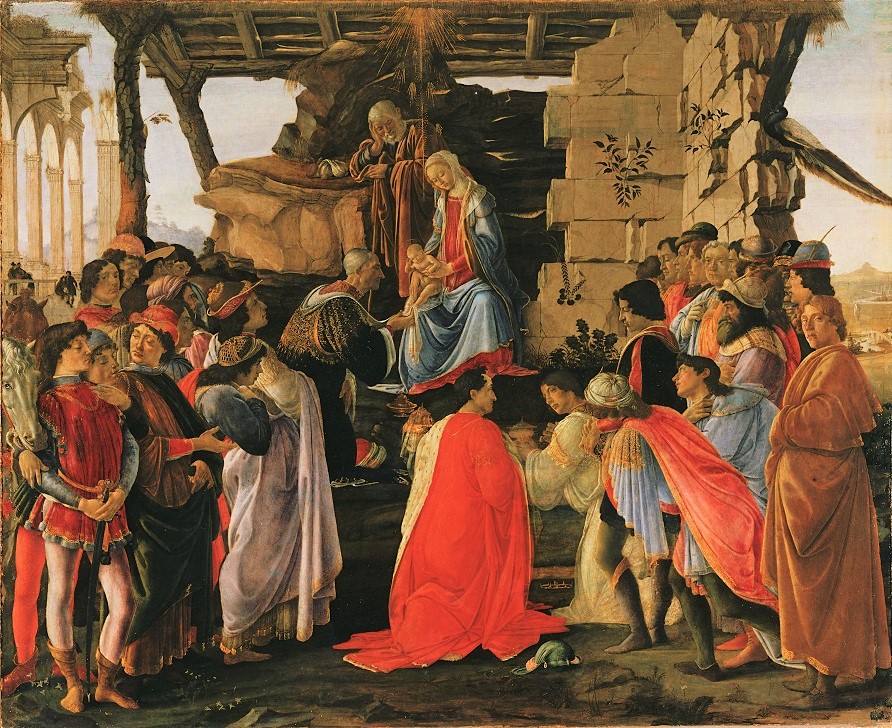
 Eliot describes his  life’s painful journey from the death of his agnosticism to the birth occurring with his  conversion to Christianity in 1927.  The first five lines were lifted from Lancelot Andrewes’s Nativity Sermon of 1622.

Hear Eliot read his poem:

http://www.poetryarchive.org/poetryarchive/singlePoem.do?poemId=7070


Posted in Religion | Leave a comment

“When Caution Trumps Courage, Kids Lose!” (1, Arne Duncan)

The early 1990’s saw the beginning of charter schools that were intended to innovate and address unique local needs in the K-12 schools.  Charter schools were allowed to operate without the many stifling regulations  imposed on traditional schools by the bureaucratic hierarchy.  Charter schools are contracted to initially operate for 3 to 5 years by “authorizers” which may be state education boards, universities, or local agencies. They are then subject to being renewed for 5-to 10-year periods or to being shut down for non-performance as may be dictated by the terms of the contract (charter).

The basic idea was to have lean, efficient schools free of much of the burdensome regulatory bureaucracy that may have been hampering success in traditional school.


Early 1990’s Environment

Traditional School Bureaucracy

Lean Charter School Bureaucracy

US Dept. Of Ed.

State Board Of Ed.

Authorizers (Board of Ed or University or
local agency)

Local Ed Agency (City  or County)

Charter Board

School Leader

School Leader

By the late 1990’s, the National Association of Charter Authorizers (NACSA) was organized to promulgate uniform standards and procedures across all charter authorizers nationwide. Promoting the idea of “quality charter schools through quality authorizers,” many state and local authorizers felt obliged to join NACSA – after all, who can be opposed to “quality.”

As declared by NACSA on their web site, “The work of authorizing – creating new schools, allowing them to innovate, and holding them accountable – is considered some of the smartest school improvement work being done in the country today.” Note that the focus is on the authorizer, not on the schools, themselves.

Late 1990’s Environment

Traditional School Bureaucracy

Lean Charter School Bureaucracy

US Dept. Of Ed.

Nat. Assoc. of Charter Authorizers
(Standards and criteria)

State Board Of Ed.

Authorizers (Board of Ed or University or
local agency)

Local Ed Agency (City or  County)

Charter Board

School Leader

School Leader


BY 2008 there were 825 authorizing organizations: state boards, county school districts, counties, cities, universities, and non-profits that were authorized to authorize. Nearly seven-hundred had four or fewer schools, but nearly a hundred had ten or more schools that they had authorized and for which they were responsible for overseeing.

By setting the gate-keeping standards for which applications would be accepted and which would be rejected, NACSA had begun to wield substantial clout over the structure of charter schools nationwide. An authorizer who is a member of NACSA subscribes to the following standard for being a Quality Authorizer: “Grants charters only to applicants that have met the established criteria.”

NACSA evolved “quality” standards that “suggest” to authorizers how a charter board should relate to the school’s leader and what powers the school’s board should or should not delegate to the school leader. A quality application should thus be judged by the authorizer on how tightly the board will control the school leader and upon how much data they would review in overseeing the leader’s operation of the school. Other standards dictated how frequently the board would report voluminous financial and academic data up to the school’s authorizer.

For example in 2009, the application for  Louisiana charter schools were judged by NACSA (to whom the Louisiana Board of Education subcontracted the selection and evaluation process) on how well the applicant “Meets the Standard,” “Approaches the Standard,” or “Does not Meet the Standard” on 64 separate criteria covering areas such as “Education, Philosophy, Curriculum, Instruction, Governance, Leadership, Management, Financial Plan, Facilities, and Contract Compliance” to name a few. (Notably absent is attention to the past national accomplishments of the applicant’s educational service provider.)

In order to get a charter in Louisiana as in numerous other places, the applicant must fit within the narrow mold of NACSA criteria.
The alert parent may well ask this question of NACSA: “Upon what data do you base your assertion that applicants meeting your criteria will establish better schools than other applicants who may not meet your particular ideal “Standards” for “Education, … , Compliance?”

As if in response to this question, the Center for Research on Education Outcomes (CREDO) at Stanford University reported that only 17% of all charter schools show significantly better test scores than traditional schools. Fully 37% were worse than traditional schools, while 46% were approximately the same as discussed in their June, 2009 report.

Concurrently with the public release of the CREDO (2) findings at the National Charter School Conference in Washington, NACSA along with the Minnesota Department of Education proposed (3) another layer of control with a new national group to actually oversee authorizers who oversee the charter boards who oversee the school leaders. This new group, charged with overseeing the authorizers, is to compile outcomes that are desired by the schools’ stakeholders and thus be subject to oversight by this national group.

And in NACSA’s view, who were the stakeholders listed during their presentation (4) in Washington? The authorizers, of course; the state boards of education; the state and county governments; community groups and non-profits, federal, state, and local taxpayers; the teachers; and the school leaders. Noticeably absent from the NACSA list of charter school stakeholders were the students and parents!

The environment for lean, efficient charter schools trying a diversity of ideas has now evolved into a structure that is even more top-heavy than the traditional schools.

Proposed 2009 Environment

Traditional School Bureaucracy

Lean (?) Charter School Bureaucracy

National Authorizer Oversight Group
(Compliance and oversight of authorizers)

US Dept. Of Ed.

NACSA (Standards and oversight criteria for
authorizers)

State Board Of Ed.

Authorizers (Board of Ed or University or
local agency)

Local Ed Agency (City or County)

Charter Board

School Leader

School Leader

Perhaps we should hit the RESET button and consider the original purpose for introducing charter schools – through a diversity of methods and ideas, free of regulatory burden, many varied local groups could start schools to address local problems – the one-size-fits-all model was to be circumvented.

After nearly 20 years we now have 4,600 charter schools in 40 states serving over 1.4 million students. The majority of these schools may have been authorized as meeting national criteria set by NACSA. Many of these schools had to squeeze through the 64-standard keyhole of NACSA’s criteria. The application and selection process has weeded out groups which do not fit the NACSA mold. The CREDO report says that only 17% are better academically than their traditional counterparts. While not all of the faltering 83% were blessed by a NACSA-authorized process, we must conclude that many if not most made it through their screening.

In conclusion, perhaps we should look at the relative success or failure of other exhaustive selection processes when compared with the natural selection process of the free market. For example, consider the selection processes in professional sports. To determine NFL draft picks, years of data on past performances are studied for months by experts. And how many first round draft picks eventually turn out to be franchise-level players? Very, very few.

And the huge investments made by experienced money fund managers in evaluating and picking stocks results in no better portfolio performance on average than those using simple index averages.

Even an experienced venture capitalist investing in start-up companies does not expect to hit on more than 1 in 10 or 1 in 20 of his best picks out of the hundreds of voluminous proposals he will review.  Predicting the success of innovations is a huge crap-shoot even for experts.

No fund manager, pro scout, venture investor, or charter authorizer has a crystal ball and can predict the performance of a stock, a player, start-up, or a school board unless there exists a track record of success in the endeavor of interest.

The question is, “Does a parent have the liberty of making a real choice for their charter school or is their choice only an illusion?” Charter schools popped out from a NACSA mold are not choices at all nor are their successes in any way assured.

In the 1920’s Henry Ford said that his customers could have any color car they wanted, so long as it was black! Now NACSA is effectively saying to parents they can have any type of charter school they want so long as it matches the NACSA brand.

And when caution trumps courage, kids lose.
—————————————————-

1. 9th Annual Charter School Conference, Washington, DC, June, 2009, Secretary of Education Arne Duncan, Keynote Address.
2. http://credo.stanford.edu/reports/MULTIPLE_CHOICE_CREDO.pdf
3. IBID, Session 206 “Who’s Overseeing the Overseers? New Demands for Authorizer Accountability”
4. IBID, Session 140B “How to Speak Authorizer: Communicating Evidence of Success”

Posted in Education - K-12, Learning and Education, Politics - US | Leave a comment

SB-724 Edition 2: A slightly improved act to improve…

Maybe letters to your legislator do matter! Or maybe it was a coincidence.

April 20, 2011   SB 724 An Act to Improve Public Education
Edition 1 reads in part:

 “To further ensure that teacher preparation programs are upgraded to reflect a more rigorous course of study, the State Board of Education, in consultation with the Board of
Governors of The University of North Carolina, shall
(i) increase the credit requirements and number of years required to complete a teacher
preparation program,
(ii) require students preparing to teach in elementary schools to complete courses in the teaching of reading and mathematics that are aligned with the State Board’s philosophy and approach for teaching these subjects, and
(iii)equire all students to receive training in technology available in North Carolina schools that measures and predicts expected student improvement, such as EVAAS, Graduation Resiliency Software, 3‑D reading, and the Student Diagnostic Pilot Program.”

Note that in Edition 1, there is no requirement that  the courses be scientifically validated nor that the graduate’s knowledge of scientifically validated methods be tested prior to certification.

May 3, 2011 BAM emails letter (attached) to all sponsors of SB724 which read in part: 

Dear Senator: …

The SBE has failed totally to specify rigorous exams for elementary teachers as the
above sentence requires, in spite of the nearly $8 million annual funding in
13510-1000 to do so.  The prescribed Praxis 11 and 12 exams have almost no questions that deal with learning theory, pedagogy, scientifically-based reading instruction, or classroom positive behavior management.  These short rudimentary tests are primarily intended for subject matter content.

North Carolina’s preparation and testing of elementary education students as reflected
by the course requirements and certification tests was evaluated by The National Council on Teacher Quality in 2009.  In their 152-page report on North Carolina, they give the state’s preparation and assessment of elementary teachers a grade of “D” for reading
instruction.  This shoddy preparation can easily be deduced from the fact that over half of our minority and low-income students do not pass the third grade reading test nor go on to graduate high school.  Our state’s overall abysmal showing on the NAEP reading tests also attests to this lack of preparation.

North Carolina should require every elementary education major to pass a comprehensive test on learning theory and instructional methods that have been scientifically validated. We should follow the example of states like Massachusetts which requires such a test of its teachers. As a result, Massachusetts ranked first in the country in 4th grade NAEP reading.
One such readily available test is Pearson’s NT104 “Essential Components of Elementary Reading Instruction.” …   Sincerely, Baker A. Mitchell, Jr.

Supporting data was posted May 3, 2011 on my blog   http://bakeramitchell.com/2011/05/04/sb-724-suggestions-to-improve-an-act-to-improve/


On May 5, 2011 SB 724  An Act to Improve Public Education
Edition 2 was modified to read:

“ To further ensure that teacher preparation programs remain current and reflect a rigorous course of study that is aligned to State and national standards, the State Board of
Education, in consultation with the Board of Governors of The University of
North Carolina, shall
(i) ensure students preparing to teach in elementary schools have adequate coursework in the teaching of reading and mathematics and are assessed prior to certification to
determine that they possess the requisite knowledge in scientifically based
reading and mathematics instruction
that is aligned with the State
Board’s expectations and
(ii) ensure that all students continue to receive preparation in applying formative and summative assessments within the school and classroom setting through technology-based assessment systems available in North Carolina schools that measure and predict
expected student improvement.”

Note that Edition 2 now has a requirement to assess teacher candidates for their knowledge of scientifically based reading and math instruction.

Summary: SB-724 could still use some improvement to improve.. but but a big “thank you” to whomever added the assesment requirement prior to certification.  The SBE is totally shirking its duty for rigorous testing of candidates as requried by GS 115C-296, and they will probably ignore this law if it is enacted.

The ultimate answer lies in HB 823 EDITION 1 to allow an amendment to our Constitution and place DPI under the elected State Superintendent of Instruction instead of the governor’s eleven 8-year appointees that make up the present State Board of Education (SBE).  Later  Editions of this bill just confuse the situation even more than the present case. Go back to HB 823 Ed. 1.

Posted in Education - K-12, Learning and Education, Politics, Politics - NC | Leave a comment

Matt Damon’s dunder-headed SOS speech

Fawned over by the would-be glitterati, Matt Damon’s speech to the Save Our Schools rally in DC received wide accolades as a clear-headed, common-sense speech that spoke to Everyteacher. There are transcripts all over the internet, but here is a … Continue reading

More Galleries | 9 Comments

Last Charge – April 15, 1865 – Co. F, 1st Tennessee Cavalry Regt.

150 years ago at Little Creek two miles east of Chapel Hill…

More Galleries | 1 Comment

Good School Shooting Gains National Attention

Louisville, KY: May 13, 2011  Two archery teams from The Roger Bacon Academy – Charter Day School competed nationally against 300 other teams and over 6,000 archers. The teams’ scores from both elementary school and middle school qualified them both to go … Continue reading

More Galleries | Leave a comment

The Great Pedagogical Debate: Behaviorism vs. Constructivism

This gallery contains 3 photos.

Background A recent paper (1) published by The John William Pope Center for Higher Education Policy discusses the conflict between the educational objectives desired by the general public and the different objectives implemented by the state’s schools of education which … Continue reading

More Galleries | 3 Comments

**HB 823 ** GOOD JOB, REPRESENTATIVES!

Dear NC Representatives, Congratulations on introducing HB 823 to amend the constitution and put the future of our children in the hands of a Superintendent elected by the people of North Carolina. Thank you. As you know, the all-powerful 8-year … Continue reading

More Galleries | Leave a comment

SB 724 – Suggestions to improve an act to improve…

This gallery contains 2 photos.

May 3, 2011 Re: Senate Bill 724 – An Act to Improve Public Education Dear Senator: Thank you for your efforts to improve education in North Carolina. Unfortunately, the addition of the new paragraph to 115C-296(b) will not accomplish anything … Continue reading

More Galleries | 1 Comment